Jesus Christ Parables
Jesus Christ told numerous parables as recorded in the New Testament of the Holy Bible.
According to the dictionary a parable is a story designed to teach a moral.
Ah, but they are so much more.
Depending upon the level of understanding a parable can be just a simple story
or an elaborate display of God's love for us.
As our understanding of God deepens so do new levels of understanding of his parables occur.
The following parables are beautiful expressions of God's love for each and every one of us.
Many of the parables in the book of Matthew are
repeated in slightly different versions and recorded by other disciples - in Mark, Luke or John.
Please feel free to add your knowledge to the parables listed here at Web-Ministry!
List of the Jesus Christ Parables
- Parable of the Mustard Seed
- Parable of the Ten Virgins
- Parable of the Leaven
- Parable of the Vine
- Parable of the Pounds
- Parable of the Pharisee - Publican
- Parable of Lazarus
- Parable of the Unjust Steward
- Parable of the Kings Feast
- Parable of the Prodigal Son
- Parable of Barren Fig Tree
- Parable of the Great Supper
- Parable of the Praying Widow
- Parable of Servants
- Parable of Rich Fool
- Parable of the Good Samaritan
- Parable of the 2 Debtors
- Parable of the Man on Journey
- Parable of 10 Talents
- Parable of Wicked Husbandmen
- Parable of Friends at Night
- Parable of the 2 Sons
- Parable of Laborers in Vineyard
- Parable of the Unmerciful Servant
- Parable of the Good Shepherd
- Parable of the Lost Sheep
- Parable of the Secret Seed
- Parable of the Wheat-Tares
- Parable of the Sower
- Parable of The Wise - Foolish Builders
Last 50 Comments Left on Parables
Post subject: God does it
User Location: Los Angeles, CA
Parable: secretseed
This may not be a popular interpretation, but from the parable itself it is hard to conclude too much more than this being about God and His activity in growing the 'seed.' It is tempting to allegorize this (i.e. say that JC is the farmer), and it is tempting to say its about our 'producing fruit' or 'miracles.' Although scripture talks about this, this particular parable does not. The point...and I think this is very good news...is that God does the growing. He is the one able to do the unthinkable; grow His word in the midst of a sinful world. For this I am thankful, and don't take this as a license to be lazy, but an invitation to be faithful to the great grower.
^ TOP
 sisterdee on Wednesday, August 13 11:55 am
Post subject: Ten Virgins
User Location: New York City
Parable: tenvirgins.txtthread
Thank you so much for the link. I have bookmarked it for further use. May God Bless you and keep you, may His light forever shine upon you!
sisterdee
^ TOP
Mel on Thursday, January 20 12:25 amPost subject: Homework Help!
User Location: Canada
Parable: prodigalson.txt
Ok I do attend a catholic high school but I'm not that knowledgeable on this stuff so I have a question is somone could answer it quickly.........
True or False .... The message of Jesus given us in the parable of the Prodigal Son is God's unconditional forgiveness.
Thanx
^ TOP
emmanuel anichebe on Friday, January 9 11:52 amPost subject: change
User Location: swistzerland
Parable: tenvirgins.txt
i want every body to change and go back to GOD almighty.i am nigeria living in wiss
^ TOP
Denny Aleksuk on Tuesday, September 30 3:28 pmPost subject: Seed, Gods' word not growing?
User Location: Minneapolis
Parable: sower.txtthread
I think you've seized upon something that isn't a part of the parable of the sower. The context is the kingdom of God. The place where we're sowing the seed is into the realm of the spirit, our hearts. Jesus said that the kingdom of God is within you. Did you notice that Jesus never addressed the issue of watering the seed? Well don't seeds need to be watered? Then why not address such a critical thing? Because if you go back into the Garden of Eden, you'll recall that a mist watered the plants of Eden, the watering was already provided for in this garden. In this realm of the kingdom within, the watering is already provided for. And lets not forget that the seed were talking about is the Word of God. "Being born again not of corruptible seed but of incorruptible seed, by the word of God which live and abides forever. If the seed is planted it will grow! God will provide the increase. The curse that has come upon the earth and our physical bodies has not contacted that place where these seeds are sown. It's infinitely easier to produce in the realm of the spirit for "he watches over his word to perform it." The tough part is in having enough scriptural knowledge to be able to plant the seed and turn loose of it for long periods of time. Being patient. But I wouldn't seize upon the curse that IS in this earth to allow the enemy to say why ever bother. Maybe your just saying that God has the final say. But then what about dope and poppy plants? If seeds are planted in the realm of the kingdom of God inside us they will grow. Good or bad.
^ TOP
tom anderson on Friday, March 14 3:49 amPost subject: relevance of mustard seed to faith
User Location: Kentucky, USA
Parable: mustardseed.txtthread
Jesus sais in Matthew 17:20 If ye have faith as a grain of mustard seed, ye shall say unto this mountain, Remove hence to yonder place; and it shall remove; and nothing shall be impossible unto you.
I only have a very short space here and must be very brief but hopefully I will impart enough to get you started. If not please email and I will give full discourse.
The mustard seed (as well as all seeds) has been given a commission by God. You may read this in Genesis 1:11 And God said, Let the earth bring forth grass, the herb yielding seed, and the fruit tree yielding fruit after his kind, whose seed is in itself, upon the earth: and it was so.
Genesis 1:12 And the earth brought forth grass, and herb yielding seed after his kind, and the tree yielding fruit, whose seed was in itself, after his kind: and God saw that it was good.
We also have been given a commission to go into all the world and teach all people what the Lord has taught us. But to many times we look at situations and circumstances and say "I can't do that." But if the mustard seed said that it would never sprout and come out of the ground. A mustard seed is to be planted approximately 1/4" deep in the ground. Considering the physical size of the mustard seed to the depth that translates to a depth equal to over 100 times the size of the seed. It does not say I can't push the ground away and bring forth. Once it is planted it only has one intention. To bring forth seed. That is the program that is on the inside. The Master Programmer put this program in place way back in the beginning when He said "bring forth seed."
The same way God has put a unique program (or purpose) into each one of us. We each have a "destiny" that God planned for us before the foundation of the world. If we will allow ourselves to be planted, then the program will bring forth that thing in our lives that God has before ordained. Nothing will be impossible unto us, because we will only be concerned about doing what is our program. I will not try to emulate your program (ministry), and you would not try to emulate mine. You know that you have a special calling from the Lord, as do I. When you know what God has told you to do, then nothing is impossible. God does not instruct us to do what is impossible. He does not prepare us for failure. He instructs me to do what I can do (sometimes only with His help are these things possible), and has prepared me to do what He instructs me to do.
Hope this helps. I could go on for days if allowed.
brothertommy@hotmail.com
^ TOP
Daniel Cox on Thursday, October 9 1:20 amPost subject: leaven-referring to the kingdom of God
User Location: New Jersey
Parable: leaven.txtthread
The leaven in the parable of the kingdom of God (referring specifically to the reference in Matthew 13:33) is anything BUT a negative usage.
To propose that the leaven here represents corrupt doctrine or heresy infiltrating Christendom to bring about the end of the age can be little more than depressing extrapolation to fit the current dispensationalist paradigm.
The direct and clear meaning of this passage is at it reads:
The kingdom of God will continue to grow and increase until the earth is filled with it, as the abundance of scripture (old an new testaments) testify.
Presented together with the parable of the mustard seed (as Christ did), the parable shows a clear hope and view of the potency and tenacity of the gospel, able to withstand and grow in all conditions, and also to make the recipient of the gospel much greater than its' original sum (the person with Christ is exponentially more than one without).
^ TOP
Janice on Wednesday, June 4 7:35 pmPost subject: Prodigal
User Location: Tennessee
Parable: prodigalson.txt
In reply to several previous emails, especially Rozilne: My book, If the Prodigal Were a Daughter, was released in January and contains four modernized parables. I also review the first century historical/social context and the parable's relevancy to the twenty-first century. The requirement of a parable is to see ourselves. In the prodigal story, most of us have been the prodigal (disrespectful of the father, seeking independence, finding ourselves stuck in a pig pen); we often act like the elder brother (selfish, self-serving, judgmental, refusing to go inside the house for the party because "he" or "she" is inside. Once we ourselves as we really are, we are to become the Father (loving, forgiving, merciful, welcoming, rejoicing). It is human nature for teenagers to break free from parental controls, as it is to obey out of obligation or requirement. But God wants us to grow up, to mature in the very image of the father, the reflection of God.
^ TOP
Kevin Douglas Rosenberg on Wednesday, December 17 6:41 amPost subject: False Teachers and False Prophets Do Deceive the E
User Location: Columbus IN, USA
Parable: Kevin_Patsy.txtthread
Read Matt. 24:24-26. The rise of false prophets and false Christs (Messiahs) able to deceive some of the very elect was prophesied by our Lord Jesus Christ. Many Christians have been ruined by the evil servants in charge of today's churches.
^ TOP
Minerva on Sunday, May 22 12:11 pmPost subject: Different opinions...
User Location: Philippines
Parable: mustardseed.txt
I encountered different opinions about the parable of the mustard seed...
but during the times of Jesus mustard is considered as the tiniest seed and concluded as the tallest of all the herbs before.with so much discoveries as of now,different interpretations come out.as for me Jesus compares heaven in to a mustard seed that started to a person,to a group then to a much bigger one...the world...now known as christians.the kingdom of God started into a scraped work but as years have passed,it grew and influenced each and everyone.if you'll observe a growth of a mustard,it is small before you'll plant it.but as it grows,its roots deepens down to the ground sucking up all the nutrients to live to grow tall.if you'll interpret it in the life of Jesus,he started as one, a carpenter and a poor man.as he grew old,he met some people.he called them and became his followers.he preached and preached until his words reached everyone,even alarmed the church before for he was considered as the awaited messaih,the savior.the small packed of Jesus grew and his teachings influenced each and everyone.as the faith of the people were united they stand tall to all obstacles against the people who are in contrast with the faith like Nero's occupation in roman history.if you'll see it the seed that was the tiniest one during Jesus time was him and the kingdom of God,the growth of the mustard is the apostles of Jesus,its roots is Jesus teachings influencing every jew,the nutrients is people's belief or faith and the height is the strength of christianity and its success doing its very best to reach the highest peak of the sky.
^ TOP
james Huenink on Wednesday, January 14 4:50 pmPost subject: Good Samaritan Example
User Location: United States
Parable: goodsamaritan.txtthread
In my church there was an example of this. Almost perfect.
A certain man came to my church one day. He had been there before as a child, some 30 or 40 years ago. His memories of the place were good in a life that was falling apart. He had lost his family a few years ago to divorce. Just a year or so earlier, he lost his job, his income, and then his home. He had been living on the street since then. He came to us in December, and it was unseasonably cold. Cold enough that I was worried he'd freeze to death. A couple from the church heard his story and saw that he was truly in need. They drove him to the nearest YMCA, and got him a room there for the year, paying for it all. They're in the process of finding him a job, too, where the husband of the couple works.
^ TOP
Denny Aleksuk on Tuesday, February 1 5:58 pmPost subject: How to plant
User Location: Minneapolis
Parable: mustardseed.txtthread
Big Island, the seed is planted with the words of our mouth-spoken out loud. Apparently there is a mechanism set up within the human being that forever monitors our words and accepts them as programs. It doesn’t differentiate between good and bad, it just receives them much like the ground accepts seeds when planted, or the way yeast responds with dough.
IT’S THE NATURE OF THE WORDS DUDE! Second Corinthians chapter four says:
13We having the same spirit of faith, according as it is written, I believed, and therefore have I spoken; we also believe, and therefore speak;
Paul quotes David and says in essence: (paraphrased) “do you recall when David said, “I believed therefore have I spoken”? Well we also have that same spirit of faith. Our faith also climaxes with a confession of the mouth.”
Jesus said a lot about our words and the affect that they have on our inner man. He talked about the faith that would speak to a mountain, sycamine tree, or uttered out loud (in the ear) in the privacy of the prayer closet.
Jesus said “if you had faith as a grain of Mustard seed you might say…” It’s very clear that he’s saying, “If you had faith as a seed, you would PLANT.
Make sense?
I hope that helps.
^ TOP
Kartasik on Sunday, May 18 3:00 amPost subject: You see it
User Location: Colorado
Parable: wheattares.txtthread
But factor this in: the tares are the CHILDREN and were planted by the Evil one. The word 'WORLD' in the text is the Greek word Kosmos - it means UNIVERSE or WORLD - not church or kingdom.
Some how the tares are actually children of the Devil (Jn 8:43-44).
While God's seed begins enslaved to Satan they are not Son's of Satan. They are as the Prodical Son who worked for no pay for the pig farmer. And as the Father of that son ran out to him when he returned - calling forth for a new robe (robe of righteousness) shoes (shod with the Gospel) and a ring (sealed with the Holy Spirit) (note the words of this Father: "for this my son was DEAD and is ALIVE AGAIN - i.e. born again). Satan's seed at times work for God - but they are paid: such as Judas who was called "the son of Evil" or as other hirelings (Jn 10:12). Satan actually loves his children - 2nd Corith. 4:4.
If this all smacks of dualism - lay this blame with Jesus himself and Matt. 13.
^ TOP
Ricardo D. Diño on Saturday, August 2 10:26 amPost subject: comment on the parable of the rich fool
User Location: Philippines
Parable: richfool.txt
My personal view on the parable is that our Lord Jesus would like to warn us of guarding ourselves against all kinds of greediness. This, i think is a one simple truth God wants us to consider. In addition, God calls for an immediate response of anybody that's warned as said in verse 20 which tells for the urgency of time.
^ TOP
CB on Sunday, February 6 4:52 amPost subject: The rich man and Lazarus
User Location: Midland, Texas
Parable: lazarus.txtthread
The rich man will be cast into the lake of fire, and Lazarus is now in heaven!
^ TOP
Sam on Monday, July 19 5:23 pmPost subject: Help
User Location: Texas
Parable: mustardseed.txt
My team at my chruch is going to be teaching this to K-5th graders what should we do to help them learn.
^ TOP
James H on Friday, March 27 3:46 amPost subject: The reproach of Jesus
User Location: Australia
Parable: unjuststeward.txt
This is one of the hardest parables to understand. Yet I offer my personal opinion as the way I see it. All due respects to the fact I might not have the truest understanding.
Mammon is the power of wealth in the world, and its a fallen world where justice does not prevail.
When the unjust steward was accused of mismanagement he became against his master. Mammon became the thing he hates or the thing he despised. We dont know if he was unfaithful or not, but he was accused. Judgiing by his actions, he loved justice more than mammon.
Therefore he resolved to leave his job and give away some of the debt owing to his master.
Already you can hear the Pharisees who loved money jeering at this behaviour, as Jesus spoke this parable. Thier haughty spirit and proud ways were all about the so called decency of wealth. Perhaps the steward had inside knowledge all along that the debts were too much for people to pay and a burden that God had never ordained. The steward knew the sham of wealth and could make good conversation with the class of people usually oppressed by the people of wealth, no less also than the relgious leaders of the day - and today. He knew he might at least have somewhere to stay if by his generosity he would be remembered when and if he had no place to live and no more job to depend on.
Whether he was commended by the principle of mammon or by the Lord I am not totally sure. I think it is Jesus who commended him for his resolve to uphold true justice knowing that there is no righteousness in mammon. Thus, the idea is to be giving it away, not hording it up. This is consistent with so much the New Testament says about riches. That is, to lay them down and follow Him, not lay them up on earth where moth and rust corrup and thieves break through and steal. Use it to make friends and be giving, and be more concerned about true justice that only God is the author of. For the unjust steward, to remain in his position would therefore be made to remain as the accused and unjust. This would be being faithful to his master, and despising or hating God, truth and justice. In whatever seemingly small way there was faithfulness, there would also be great faithfullness. He that is unjust in the least, is also unjust in much. Therefore, the steward had to make his resolve one way or the other. You cannot serve two masters. I feel that the parable illustrates more about the stewards contempt for mammon than the love of God and so the Pharisees revolted as they heard this because they were steeped in the ways of wealth, believing it to be the ultimate tool for good. Yet God in Jesus announced, 'that which is highly esteemed among men is an abomination in the sight of God'. I believe the steward was fed up with the things of the decietfulness of riches and the cares of this world and became resolute enough to reject his place with mammon and stand up for true justice by deploring its principles and forgiving the debts the way he did. Its a bit like Moses who forsook all the pleasures of Egypt and went and lived with the Hebrew outcasts, 'esteeming the reproach of Christ greater riches than the treasures in Egypt: for he had respect unto the recompense of the [ heavenly ] reward. Heb 11:26
Thus we can see the Godly things to esteem are heavenly things and the earlthy things are an abomination. Paul counted all his losses as a dunghill. I dont know for sure, but his high rank in the Jewish orders would have had a lot to do with wealth and the principles of mammon. Man sees the good works in it. God sees the heart. What do we have in out heart? Will we be like the unjst steward and take up our cross, or we will side with mammon and not care about truth, about justice, about firstly seeking His kingdom and His righteousness. Will we have faith like Moses, not knowing fully about God, but leaving all, forsaking all and following Him - not as a prosperity doctrine, but in his reproach? Even I am convicted by this. amen
^ TOP
joe on Sunday, June 19 7:52 pmPost subject: prodigal son
User Location: england
Parable: prodigalson.txt
hi. i have a similar situation. im not stricly speaking a christian but i do value the teachings of the bible and i do have faith. i turned to the this parable to try and solve our situation but the answer i gleaned seems somehow wrong. my older brother worked for my dad in his medical practice with his secretary and became an important member of the team. he (son) had booked a holiday to greece and was expected to return within 2 weeks but he never did which left my dad in dire straights and without an office assistant which is a crucial part of that very busy practice. i had to step in and perform the duties my brother had been. now he wants to come back to his job and ridiculously high wage. like the prodigal son he squandered my dads money in another country andthen when it has all run out he will be back for more. i dont think he should be rewarded for abanoning my dad and i dont think he should be allowed to please himself. i know that if the boss wasnt my dad he would have been fired.if he is allowed to return he this kind of thing will re occur and he will learn nothing.i think he should be taught a lesson by not being allowed to waltz back in to the job. Although he is my brother and i love him dearly and i appreciate that is now "found from being lost" i think he should learn that his conduct was wrong and unacceptable. i know u guys will say forgiveness... which is all good but if he keeps being forgiven he will never learn. what do u guys think the right approach is? i would be most interested to read what you think the best course of action is. cheers
^ TOP
Larry Cockerham on Sunday, July 6 5:08 amPost subject: The Parable of the Ten Virgins
User Location: Heidelberg, MS
Parable: tenvirgins.txt
There is disagreement amongst commentators concerning the identity of the Ten Virgins. Most believe this parable points to Israel at the end of the tribulation anticipating the Messiah. Some believe it points to the church prior to the Rapture. Either way, the focus is on being prepared. The contrast is between the believer who is a possesser, and the unbeliever who is merely a professor. The oil pictures the Holy Spirit whom the true believer will have (Rom. 8:9). The symbol of the virgin pictures those without reproach, blameless. The foolish virgins are typical of those professing Christians whose outward life and conduct is unstained with iniquity (externalism). Their lamps are a symbol of their profession. They all slumbered and slept (pictures the indifference of this age). When the midnight cry is heard the foolish virgins cry, "Give us of your oil" (v.8), but this oil (salvation) cannot be borrowed; it must be bought of Him who alone can sell it (Rev. 3:18; Isa. 55:1). When the Bridegroom returns it is too late as the door is shut (entrance to the kingdom). The lesson for all of us here is that we must have a personal acquaintance (v.12) with the Lord Jesus Christ. There is a great difference between knowing about him and knowing him by having a personal born again experience of regeneration.
^ TOP
Reema on Thursday, January 16 11:21 pmPost subject: History of People responsible for Prodigal Son
User Location: Texas
Parable: prodigalson.txt
Does anybody know the history of people responsible for the content of the Prodigal Son?
^ TOP
doulos on Wednesday, January 7 3:46 pmPost subject: mutardseed.re=patsy
User Location:
Parable: mustardseed.txtthread
Thank you for replying:My whole reason for writing the way I did was in case someone read it who does not know the word of God.Why refer to things some do not understand.Jesus used parables for a reason,b/c he knew everyone does'nt understand the word.(John 4:13)''Everyone who drinks this water will be thristy again,but whoever drinks the water I give him will never thrist.Indeed,the water I give him will become in him a spring of water welling up to eternal life.'' This scripture speaks for its self.People cannot know God,Jesus Christ,nor The Holy Spirit through you.Yes we can wittness to others of God and His greatness,but that would only quench their thrist.People must get to know God for themselves,we are to witness to them yes,but they'll be judged alone.(Jerimiah 17:5)''Cursed is the one who trust in man,who depends on flesh for his strength and whose heart turns away from the Lord.'' People must trust God and know Him,not just read scripture;but have a intimate relationship with God.(Psalms 1:3)He is like a tree planted by streams of water,which yeilds its fruit in season and whose leaf does not wither.Whatever he does prospers.The only way to obey this scripture is to be planted in a word church first.Futhermore,knowledge is good but wisdom is knowledge acted upon.Wisdom is very good ,but w/o the love of God both of these are void.I understand exacly where you are coming from and everything you said made sense,so this will be my last reply;B/C I don't intend on arguing the word w/ anyone.Perceptions are always different even when it comes to the word of God. So I pray that you be led by the Spirit of God. Love you with the love of the Lord!!!
^ TOP
Big Island on Tuesday, January 18 3:09 pmPost subject: How do we plant the Mustard seed?
User Location: Minneapolis
Parable: mustardseed.txt
Can anybody offer anything in way of how we plant this mustard seed? If we are going by faith and there is no evidence to support that it really got planted, then it seems to me that it would be imperative that we know exactly how to do it. Wouldn't it? If were judged according to the fruit that we produce by the planting of this seed, then wouldn't everything START with that knowledge? Is that not a valid question? Am I missing something? Does anybody know?
^ TOP
Imran Bhatti on Friday, March 25 7:50 amPost subject: video projector
User Location: Lahore, Pakistan
Parable: mustardseed.txtthread
Respected authorities,
Greetings in the name of Lord Jesus Christ.
My name is Imran Bhatti and I am a director of Sunday school of Christ Revival Church. It is situated in Lahore, Pakistan. There are about 200 children learning about Jesus Christ in our Sunday School. We often take them to other churches where they learn from other teachers also. We also take them to different programs arranged by Scripture Union Pakistan so that they may learn more. I have 5 permanent volunteer teachers working with me and I also call a few other volunteers to help me in different programs, whenever it is needed. In our Sunday School children also learn by drama. On every Christmas and Easter children perform different dramas regarding Christmas and Easter. By this people can learn more about our savior. As you know that we are living in a computer age and there is a lot of Biblical material available on different web sites. For example Bible stories, Biblical games and puzzles. Such soft wares are very effective for children because children are more interested in moving pictures than in still pictures. We have some still pictures in the form of flash cards of Biblical stories. But flash cards can not fulfil the strong impact of motion pictures. So in order to build a strong base of our children and church family, we are in great need to get some donation in the form of new or used video projectors, screen and a overhead projector. We also need these instruments to make the messages more effective and to display songs for choir and congregation. Kindly let us know, what you can do in this matter.
Looking forward to hearing a positive response from you SOON.
May God bless you.
Yours in His Service,
Imran Bhatti
Director of Sunday school & Bible Teacher
Office Tele:- 092-042-5855968
Cell Phone:- 092-042-03004095074
E-mail: heaven3_ct@yahoo.co.uk
^ TOP
Denny Aleksuk on Tuesday, April 26 5:54 pmPost subject: Parable of the sower' relation to prayer
User Location: Minneapolis
Parable: sower.txt
In the parable of the sower Jesus lays down a scriptural truth that all fruit production in the kingdom of God comes as a result of a mans receiving Gods word and holding fast to it until God manifests it in our lives.
It’s very clear that Jesus is playing this out as he’s speaking (a sower going forth to sow). He’s talking about a sower and yet he IS that sower. The question arises then, if Jesus has left the earth and we aren’t privileged to hear him speak, how do we do what he said and receive the seed of his word into our hearts thereby utilizing the idea of seeds being planted in soil?
Thank God that this isn’t all that he said. He also spoke of a man who cast seed into his own garden. Why would it be necessary to sow seeds in our own gardens? Well, why is it necessary for farmer to plant seeds in their fields? How about that they might want a harvest? Do you want a harvest in your life? Then plant the seed.
Mathew 13:31. Another parable put he forth unto them, saying, The kingdom of heaven is like to a grain of mustard seed, which a man took, and sowed in his field:
32Which indeed is the least of all seeds: but when it is grown, it is the greatest among herbs, and becometh a tree, so that the birds of the air come and lodge in the branches thereof.
Jesus said that the ones who produced fruit are those who “received” the seed.
Isn’t it interesting that the one scripture in which Jesus tells his disciples how to get their prayers answered-Mark 11:24, also has the word “receive” in it.
Mark 11:24 (King James Version)
24Therefore I say unto you, What things soever ye desire, when ye pray, believe that ye receive them, and ye shall have them.
Could the underlying principle that makes prayer work be none other then the idea of the “sower sows the word”?
Jesus said “what things soever you desire, when you pray, believe that you “receive” them, and you shall have them”.
Is it me or is there a similarity in idea between the two contexts? In the sower parable a person received the word of God, and with patience produced fruit.
Notice with patience.
Do you know what that indicates to me? It means that the guy had absolutely nothing-except Gods word on the matter (he had it by faith). It wasn’t manifest at that time.
In Mark 11:24 Jesus again invokes this idea of believing or receiving Gods word on a matter, that matter being, if you’ll accept Gods word that he gave you the very thing that you asked for, you shall have it-eventually. But because it’s not manifest at the time, it’s very clear that you received it “by faith” (“I have it by faith”).
But it’s very clear that there is a time in which we do not have the thing that we prayed for, or in the case of the parable of the sower, planted the seed for.
Personally I believe the jest of the matter is this: No matter what you do in your spiritual walk, you will never reap any fruit that the kingdom of God has to offer until you:
1. Accept Gods word by faith-in prayer, believing that he heard you, and that he granted it to you upon your requesting it.
2. And holding fast to it for a period of time until this plant so to speak of faith becomes strong enough to manifest.
3. Also, I think it’s good to bring up the resoluteness of the person who is successful at fruit production. Because the only thing that kept a person from producing was his not having any “root in himself”. All this means is that your going to have to grit you teeth and be patient giving your seed that you planted time to grow strong enough to sustain itself. IT DOESN’T HAPPEN OVER NIGHT. The waiting is indeed the hardest part.
As you can see there is a part that the believer plays in the receiving of Gods word i.e., planting the seed. And it’s done through prayer, speaking Gods word out loud in private. I.e. “HEAVENLY FATHER I RECEIVE BY FAITH NOW YOUR PRECIOUS HOLY SPIRIT…” Or “HEAVENLY FATHER, I BELIEVE THAT I RECEIVE IT NOW, YOUR PRECIOUS HOLY SPIRIT…” Or whatever it is that you are requesting.
Until you’ve done these things you really haven’t appropriated faith for anything. Just be resolved to “hold fast that thou hast…” and if diligent God will reward you with a manifestation of that very thing.
^ TOP
Kevin Douglas Rosenberg on Wednesday, January 7 7:03 pmPost subject: Even Mooching Need Not Be Stealing!
User Location: Columbus, IN, USA
Parable: Kevin_Patsy.txtthread
Just because someone with riches who wishes to keep them dare insult a beggar as a thief does not imply that Jesus would consider the beggar to have even thought about stealing anything, as if it were a sin to ask. On the contrary, Jesus Christ taught His followers to keep on asking, seeking, and knocking, expecting to receive, find, and benefit from opened doors! (Matt. 7:7, Greek )
The warning for dealing with such people is in Matt. 7:6. The Word of God is "sacred [stuff] to dogs" or "pearls [cast] before pigs" to any person who dare insult any beggar as a thief without awareness of any actual theft. Our warning from Christ is that these people might turn on us and tear us to pieces if we present the Word unwelcomely. What will happen in heaven in all cases of a Christian who has suffered for asking and been treated as a thief, the word "stealing" in the insult will fail to translate to the Hebrew root in "Thou shalt not steal" (Ex. 20); if the insult came from another believer, such a Christian shall be compelled to repent as a liar and a lover of money. Still, we must watch out in the here and now for pretended Christians who accept the world's definition of "stealing".
Legally, the crime of larceny, the legal name for simple theft, has been committed when someone has illegally deprived someone else of the use of his goods by taking something away without consent. The evil person who accuses someone making a material request of "stealing" has no charges whatsoever to press until the item is physically stolen. Still, if the evil person be a store manager or cashier, they can impose ejection and announce permanent unwelcomeness. That is not punishment for theft, but martyrdom for begging. Do not believe the evil claim that the beggar accused of stealing has stolen anything without a physically stolen item!
As for the Apostle Paul's command in Eph. 4:28, it applies only to genuine thieves. The command to work with one's hands does not take effect because a beggar got insulted as if he were a thief, but because a real theft was committed. Sometimes, as in 3 John 7, an utterly uncooperative mission field will force Christians to accept that there will be no help from the pagans and to work for all the money for ministry. Still, the command from our Lord Jesus the Messiah is to make friends with "the mammon of unrighteousness" so that the rich folk of this world might take care of us in times of trouble and might endow our congregations financially. Not all such friends, however, will. Yet if the rich folk of this world will take care of us in hard times or grant us wealth for our ministries, not only are we commanded by Christ to accept it, we are commanded to seek the ties that lead to it (Luke 16:9, KJV).
I will not defend sins of idleness or actual theft as a Christian. Great is the mercy of God! Will seeking the favour of rich folk would make us idle? I believe that shallow Christians might be made idle by oodles of money, yet firm believers will try to use such money to spread the Good News throughout the whole world! Instead of living in these Unites States where most unbelievers have heard and rejected our Gospel, we could go among such peoples as the Miao of China who have no testimony of Jesus Christ if we had plenty of wealth and did not have to live there as impoverished outsiders.
I hope never again to hear you later consider the moocher as stealing. The seeker of permission to take something has not stolen until the item is taken without consent. A supermarket grazer is a thief, but it is not really "stealing" to ask for something and be told, No. Jesus indeed commanded us to continue to ask, seek, and knock!
Yours in Christ,
+++Kevin Douglas Rosenberg
a martyr for continuing to ask, seek, and knock (Matt. 7:7 )
P. S. We ignore the meaning of one translated text alone in favor of interpretation because the original, fully inspired Scriptures were written in Hebrew, Aramaic, and Ancient Greek. They do not translate word for word into Modern English!
As for misguided, fleshly yet litteral interpretations of Scripture, consider the following three kinds of backslidden Christians:
(1 ) The evil servants in charge who run their churches in personal sin as if judgement were not coming upon them through humans on this earth (Matt. 24:45-51 ). (Ten Virgins comments)
(2 ) Those treated as mentally ill, caused to sin in idleness. The curse from Matthew 18:5-7 stalks somebody else for causing their habitual sins...
(3 ) Anybody who got persecuted among even one other believer and got called to flee but could not. Have sympathy for such people, as for me. My evangelist was persecuted as mentally ill, and I got persecuted within ten days of my conversion along with him for my "baby Christian" testimony among Hindus at the University of Illinois. We got called to flee together (Matt. 10:23 ), yet we had not read that passage yet. About ten weeks later, he withdrew from the U of I and fled to Texas without me. Without transportation, I could not ask his church for help. I had implored him to take me there to stay, but he would not. Still believing, still insisting that my calling was to remain to pursue my degree and eventually a PhD (?-- Matt 23:1ff ) in Chemistry (?-- Col. 2:8 ), he refused to take me unless I promised to return with his car that horrible day in December 1991. God knew that I was headed for deepening trouble at the U of I and that no church there was able to meet my needs.
The believer who has missed his missionary calling through failure to flee in the Modern English speaking culture deserves compassion. I had no one to ask to take me to Texas. My departed evangelist would not do his part to escape his brother's church in Arlington TX in order to seek another in neighbouring Dallas TX which might have shown me a welcome and my need to go out as a missionary rather than struggling to build a life of my own in these United States. No one should blame me for the failure of the churches of Urbana and Champaign to bring me in and lead me to the one which might have rebuked my career plan and led me out into the mission field.
^ TOP
Sherre Gaertner on Tuesday, August 15 3:53 amPost subject: Picture of grown mustard seed tree
User Location: Media, PA
Parable: mustardseed.txtthread
I too am teaching a class and would very much like to have a picture of the grown mustard tree.
Thanks if you can help!
Sherre
^ TOP
Paula Wargo on Wednesday, November 3 3:50 amPost subject: athena
User Location: texas
Parable: leaven.txtthread
Are you the same George Banagis that scetched "Athena"?
I have been looking for more from you for ages now. I clipped your drawing out of a magazine in 1990 when I was station @ Fort Bragg as a parachute rigger. Being a woman paratrooper, I could relate to Athena. Please send me a website or other where I can find more of your work.
And Thank You, for Athena.
Paula Wargo
^ TOP
Robert Mendez Jr. on Monday, March 24 5:18 amPost subject: Good Samaritan
User Location: San Antonio, Tx
Parable: goodsamaritan.txtthread
It seems by the way Jesus told the story, that one need not be a christian to inherit eternal life. Jesus was asked this question and after the parable answered " Go and do likewise". Now the good samaritan was not a christian, but a product of mixed interbreeding between jews from the Northern Kingdom and other people after Israel's exile. They were considered heretics. Yet, it was what was in the samaritans heart that was the focal point of the parable. To say that only christians ( only people who accept Jesus as their Lord and savior and accept that he died on the cross for their sins) are going to be saved, is in a way like, judging other people. And as you well know, Jesus clearly states "judge not, least you yourself be judged.
Amen and God bless everyone.
^ TOP
rheeza hernandez on Tuesday, January 7 2:57 pmPost subject: mustard seed/mustard plant
User Location: philippines
Parable: mustardseed.txtthread
our theater group has been staging passion plays for the past 30 years. Our theme for this year is about faith, we need to know more about the mustard seed and mustard plant. if you could possibly give us a picture of the plant and seed and what is its significance to faith perse as described in the parable. thanks and more power. God bless
^ TOP
Alissa Russell on Thursday, December 30 4:02 amPost subject: Picture of a mustard tree
User Location: Dallas, TX
Parable: mustardseed.txtthread
Could you please send me your picture of a mustard tree? I need to use it at my church for our current topic of Bible study. Thank you.
^ TOP
Dave on Thursday, April 3 9:18 pmPost subject: One perfect response
User Location: San Juan Capistrano
Parable: prodigalson.txt
The only perfect response in each of the three parables in Luke 15 is God's response. He seeks to save the ignorant and helpless. He seeks to find an carelessly lost inheritance. He affirms the right of man to choose. He rejoices in the results of shepherd, the woman and the return of his son.
Neither the younger or older son respond perfectly to the situations they are confronted by. Only when the youngest son's life style drops below that of the father's servants does he decide to return home.
His repentance was perfect, though.
The older son is obedient and hard working. In fact he is working at earning and preserving his inheritance. Nothing in his life would have taught him to respond as the father did. Only a father can understand the joy of a child returned to him. The oldest son should have joined in the celebration but could not. His obediance was without fault.
Today our churches don't have the excuse of not knowing the true nature of God. Today we have the presence of the Holy Spirt, and still many believers cannot rejoice at the salvation of repentant sinners. They too have led lives of hard work and obedience.
We seek a simple straight-forward understanding of things; even in God. We seek to hold a complete understanding of God in three short stories; It isn't meant to be. Use these stories to understand God's love and his desire for a relationship with each one of us.
Thesis topic: The evolution of the meaning of the prodigal son; How context can change the classic understanding of this story. Or how different cultures relate to this story;
^ TOP
Chito on Sunday, November 12 12:46 amPost subject: Children's Bible Stories
User Location: PH
Parable: prodigalson.txtthread
The Prodigal Son is a parable of a wayward son reunited with his father and family after having squandered all his inheritance through wasteful and idolatrous living. Learn of God’s overwhelming and encompassing love for those who humbly repent of their foolish ways. The example of the father’s joy of the return of his repentant young son is contrasted against the trust and rewards kept for those who do not waste that which God entrusts to them.
A terrific way to teach a child this story of God's faithfulness. This is a very wonderful lesson for children's bible stories which can be found at http://www.nestfamily.com
^ TOP
John Sebreros on Thursday, July 1 2:15 pmPost subject: What it meant during Jesus' time
User Location: Santa Paula California
Parable: tentalents.txtthread
Biblical Text: Luke 19:11-27
Title of Message:
Accountability and the Kingdom of God
Central Point or Truth:
There are three central truths, that judgment will come upon the unfaithful stewards and leaders of God’s people; that the Kingdom of God is present now; and the need for faithfulness and obedience. “The parable of the pounds is certainly not, as Luke 19:11 assumes, an announcement of the delay of the Parousia…” (Jeremias, The Parables, 99). Jesus had acquired the kingdom during the present time of his ministry, this being declared or manifested by his majestic triumphal entry into Jerusalem. The power and authority of the Kingdom of God is in operation now. “The kingdom of God involves two great moments: fulfillment within history, and consummation at the end of history” (Ladd, A Theology , 91). The kingdom of God is not only a future realm but the present dynamic power and dominion of Jesus in this present history as it is known. This parable conveys the point that “the ‘kingdom’ in question was not a realm or a people but the right to reign as king. According to this passage, Jesus speaks of the Kingdom of God in terms of the exercise of divine royal power” (Ladd, Jesus and the Kingdom, 132). This is contrary to traditional opinion that the parable’s central truth is about faithful stewardship after Jesus’ ascension and until the second coming of Christ. “Everything gets carried out with the dispatch. The ‘getting of the kingdom’ is not an unrealized event of the future, but one already accomplished in the story. The reward to those who have handled their charge well does not consist in some future overseeing of possessions, but present, and consist in power over cities within the Kings realm” (Johnson, 144). The kingdom of God now is not only God’s rein, which is similar to the concept that rabbinic Judaism held, “it is rather a dynamic power at work among men” (Ladd, 235). The power as demonstrated in the person and mission of Jesus the Christ. Those who did not recognize the present power and rule of the kingdom would be condemned at the future consummation of God’s kingdom. Johnson suggest that “we must take seriously the possibility that Luke intended his parable to confirm 19:11, for the progress Luke’s story after the parable shows us in fact a ‘manifestation’ of God’s kingdom ‘immediately’” (Johnson, 152).
Context:
The scribes had been entrusted with the spiritual leadership of the nation. These leaders did not accept Jesus’ authority. A recent political incident was a part of their memory. “This parable closely parallels the details of the trip of Archelaus, son of Herod the Great, to Rome in 4 B.C. to receive imperial ratification of his hereditary claim to rule Judea, along with the Jewish embassy which opposed him and Archelaus’s subsequent revenge of the Judeans” (Blomberg, 218). This parable is a warning of judgment.. “The sanguinary revenge inflicted upon the people by Archelaus after his return had never been forgotten; Jesus appears to have used this incident in a crisis-parable as a warning to his audience against a false sense of security” (Jeremias, The Parables, 59).
There was an expectation by some that the kingdom of God would appear immediately (Luke 19:11). Jesus was on his way to Jerusalem and it was there that some possibly believed he might set up the manifestation of the Kingdom of God. The parable of the talents, particularly in Luke’s account, relates to his triumphant entry into Jerusalem as king. “The progression towards Jerusalem takes place ‘after he had said this’. These words establish a link with the preceding periscope. That periscope has indicated that the kingdom will not appear immediately in Jerusalem. However, the subsequent story has an almost immediate declaration of Jesus’ kingship in Jerusalem. The apparent futurity of the kingdom in v. 11 must be read in the context of the presence of the kingdom in v.38” (Guy, 128). Not only is the event after the parable significant. The event prior to the parable is also important to understand the parable. “Luke’s introductory clause, ‘as they were listening to this’ v. 11, counsels against making any significant structural separation after v 10 and deans that we grapple with the relation of the parabolic teaching in vv 12-27 to the preceding account of Jesus’ encounter with Zacchaeus (vv 1-10)” (Green, 674). Salvation arriving at the present time to the life of Zacchaeus is a notable reference that Luke makes about the presence of salvation, today. The parable was told, according to Luke, for two reasons, he was headed towards Jerusalem and because they expected the Kingdom immediately.
Content / Exegesis:
Jesus was possibly speaking to the crowd, the disciples, and the scribes, his opponents. “In the journey narrative, Luke is generally careful to specify Jesus’ audiences, and purposefully. To the disciples, he has Jesus address teachings on discipleship; to the crowd, calls for repentance, and warnings; to the opponents, sayings of rejection and judgment. His failure to make this audience clearer to his reader leads one to think that the group to whom the parable was spoken was meant to consist in all those with Jesus on the way to Jerusalem, with the parable addressing each segment in diverse ways” (Johnson, 145).
The parable being addressed to the spiritual leaders of Israel is a warning of Judgment. Joachim Jeremias refers to this parable as being against the opponents of Jesus as being the claimant to the throne. “God has entrusted them (scribes) with much – the spiritual leadership of the nation, the knowledge of his will, the key to the kingdom. Now God’s judgment is at hand; now it will be decided whether the theologians have justified or abused this great trust, whether they have made good use of his gift or turned it to their won advantage and to the imposition of burdens on their fellow-men, whether they have opened the door to the kingdom, or shut it their judgment will be specially severe” (Jeremias, Rediscovering, 131).
The traditional view of the parable is that it is about parousia (return) of Jesus. There are some who do not hold to this traditional view. This may be because it is interpreted in light of the Matthean account of the parable. The other view under investigation is that the parable is about Jesus’ immediate Kingship, and the kingdom of God being present immediately, yet not in the form of the future consummation. “There is little in the parable itself which demands considering it an allegorical tale about the ascension-parousia. In particular, there is nothing in Luke’s version to indicate a temporal delay. Matthew’s Parable of the Talents appears to have affected the reading of Luke’s story” (Johnson, 143). Johnson also states that the getting of the kingdom is not a future event not yet realized but one that is already accomplished in the story (Luke 19:15). He also states that the reward do not relate to some future overseeing of possessions. “They (the rewards) play a present leadership role within the kingdom gained by the nobleman” (Johnson, 144).
The traditional opinion of Luke 19:11 is that Jesus is refuting the expectation of the kingdom. It is interesting to consider the view that 19:11 is not refuting but confirming instead of confuting. The verb “appear’ may have different meanings apart from only a full-scale, visible realization of the kingdom. “It is not al all impossible that Luke intended to mean that ‘the Kingdom of God was going to be declared.’ This would find immediate confirmation in the proclamation of Jesus as King in 19:38” (Johnson,150).
Fitzmyer argues that Luke intentionally altered Mark’s reference to the David kingdom to Jesus being just king. “It is not the kingdom of David that is coming, but Jerusalem’s ‘king’ himself” (Fitzmyer, 289). Fitzmyer does so because he understands that a declaration of a kingdom here would be incompatible with the postponement of the kingdom’s appearance in 19:11. Yet it is wise to consider that “king” implies “kingdom”. “19:11 is not a distancing by Luke from an imminent or present kingdom. Rather 19:38 is to be read in conjunction with 19:11. There is not yet a kingdom, but there is a king, and so by implication there is a kingdom” (Guy, 134).
Guy states that when it is argued that 19:11 is clearly futuristic and that consequently all the other present-oriented statements must be interpreted in a futuristic sense that may be an imposition of our twentieth century western understanding with its dichotomous approach to logic and thought upon first century Lukan thought (Guy, 136).
The parable of the talents is about the present kingdom of God in the life and ministry of Jesus. The key verse of this parable is 19:11: “While they were listening to these things, Jesus went on to tell a parable, because He was near Jerusalem, and they supposed that the kingdom of God was going to appear immediately.” The parable of the pounds does not deny the expectation but confirms it. “Jesus is proclaimed as a King and does exercise rule through his apostles in the restored Israel. This is a ‘manifestation’ of God’s kingdom” (Johnson, 157).
The parable is not only about the timing and manifestation of God’s kingdom but also about faithfulness. “Jesus underscores the certainty of the ‘appearance’ of the kingdom, but characteristically shifts the focus from the question of when to the issue of faithfulness in anticipation” (Green, 674). The kingdom of God is associated with faithfulness to its King. The message of the kingdom is associated with faithfulness to God’s revelation of his word entrusted to the leaders of Israel. Because of the lack of faithfulness judgment was approaching.
Practical Application:
The Kingdom of God’s authority may be exercised now. The future consummation and all of its glory is not an excuse to not use the dynamic power of the kingdom now. Faithfulness to God is not only being a good steward in holding the correct teachings and revelation of God but it also involves living a life of power manifested by godly character as well and ministering to others the powers of the world to come. The pounds that are now entrusted to believer is the preaching of the cross with its message of salvation, the healing of sick bodies, setting free from satanic bondage, and the other works that Jesus and his disciples performed.
The pound entrusted to Israel was the revelation of God’s redemptive plan and correctly representing the character of God. The teaching of the coming Messiah as a suffering servant was hid and exchanged for a mean legalistic Lord (“For I feared thee, because thou art an austere man: thou takest up that thou layedst not down, and reapest that thou didst not sow” 19:21). The Gospel of grace must be preached and lived. This is only possible as long as the church is alert to the deception of legalism. The natural tendency of religious bodies it towards legalism and self effort instead of the grace and inner transforming power of God.
The futuristic aspect of the kingdom is a challenge for watchfulness and accountability. Because of the impending judgment Jeremias states that the primitive church interpreted and applied the parable of the talents as one of the five Parousia-parables. “The five Parousia-parables were originally a group of crisis-parables. They were intended to arouse a deluded people and their leaders to a realization of the awful gravity of the moment” (Jeremias, The Parables, 63). The other four crisis-parables are the nocturnal house-breaker, the bridegroom arriving, the master of the house returning, the merchant returning from his far journey. Ministry must be done today in light of the judgment seat of Christ.
The church, especially each individual Christian, must be burdened for the horrible punishment that awaits, the citizens (Luke 19:14, 27), those who do not serve Christ. Compassion for the lost will change the eternal future for some who do repent. If the church does not have compassion then that many more people will face an eternal catastrophic ending.
The parables illustrate the mystery of the kingdom of God. “the Kingdom of God has come into the world , but it comes with persuasion rather than power and must be accepted to be effective, even as the ground must receive the seed” (Ladd, Jesus and the Kingdom, 238). As agents of the kingdom of God believer should continually persuade others towards Christ.
WORKS CITED
Blomberg, Craig L. Interpreting the Parables. Downers Grove Inter Varsity Press, 1990.
Fitzmyer. The Gospel II. Peabody: Hendrickson, 1990.
Green, Joel B. The Gospel of Luke (Word Bible Commentary).
Grand Rapids: Eerdmans, 1997.
Guy, Laurie. “The Interplay of the Present and Future in the Kingdom of God.” Tyndale Bulletin 48.1 (119-137) 1997.
Jeremias, Joachim. The Parables of Jesus. New York: Scribner’s,
1954.
Jeremias, Joachim. Rediscovering the Parables. New York:
Scribner’s, 1966.
Johnson, Luke Timothy. “The Lukan Kingship Parable.” Novum Testamentum 24.2 (139-158) 1982.
Ladd , George Eldon. Jesus and the Kingdom. Waco, Tx: Word, 1964.
Ladd, George, Eldon. A Theology of the New Testament.
Grand Rapids, Eerdmans, 1974.
^ TOP
Joell Burville on Thursday, March 27 5:51 pmPost subject: Mustard Seed
User Location: Kirkland, WA
Parable: mustardseed.txt
Dummelow writes: " The vegetable or herb, not the so-called mustard tree, is meant. In hot countries it sometimes grows to a great size. The Jerusalem Talmud says, 'There was a stalk of mustard in Sichin from which sprang out three boughs, of which one was broken off, and covered the tent of a potter, and produced three cabs (12 pints) of mustard.' Rabbi Simeon said, 'A stalk of mustard was in my field, into which I was wont to climb as men are wont to climb into a fig-tree.' Although the mustard seed is not really the smallest of all seeds, it was so in popular estimation." (Dumm. pg. 673)
Mark's version says that the mustard tree is "greater THAN all herbs" and Matt's version is the same as Webmaster writes, "greatest AMONG herbs". "Greater than" is different than, "greatest AMONG." To make my point, I am larger than an apple, but that doesn't mean that I am the largest among apples! NEB and J.B. Phillips write of the mustard tree, "---it springs up (grows up) and grows taller (becomes bigger) that any other plant." RSV, "becomes the greatest of all shrubs", NI and NAS, "largest of all garden plants, with (forms) such big branches---" LB, "one of the largest of plants, with long branches---." Only the Amp Bible writes, "greatest of all garden herbs---" All interpretations are much the same for both Matt and Mark. I guess the point is that everything is a matter of human interpretation and and it seems to me that what is most important is to gain the SPIRITUAL import of the Scriptures of which there is only one. It is not mine or yours but God's given to each of us in the quiet of silent prayer. I agree that word definitions are MOST important and useful in discovering the spiritual aspect of the Scriptures, but only to that end.
^ TOP
keny h pereira on Wednesday, March 24 3:28 pmPost subject: bighouse5 is speaking the Right
User Location: bahrain
Parable: mustardseed.txt
About Mustard seed, he is
^ TOP
SEINI on Sunday, April 2 8:04 pmPost subject: Luke 15
User Location: new zealand
Parable: prodigalson.txt
1. Story of the strayed sheep
2. Story of the lost coin
3. Story of the Prodigal son
Could these three parables have the same message from different circumstances.
Strayed sheep or lost sheep, I see a member of the church caught up with the temptation of the world which is good for the eyes and good for the taste But far from the truth, the Pastor or Sheperd then must reach out or seek out to correct his/her way get him/her back on the right path.
Lost coin or misplaced coin, a member of the church family is backsliding because of some miscommunications or hurt by another church member. Again, the leader or some headfigure of the church seek out and make right with this lost member.
Prodigal son, he was in tune with everything about the church, still chose to leave God behind to find the worldly happiness, left home/church, father did not go out to seek him out as he (prodigal son) knew fully well what he was doing yet chose the world thinking he knew better. When there was no place else to go, home came to mind where peaceful rest always found, returned and was welcomed with open joyful arms. Shouldn't we seek out the son/daughter who do so choose to leave in their own free will knowing fully well after being told the consequence they'll meet if leave the truth? Is is biblical? The Holy spirit is always with us trying to guide us back home, the Father is always thinking and waiting with open arms to welcome us back home.
^ TOP
Webmaster on Saturday, July 27 4:35 amPost subject: heaven = mustard seed!
User Location: Tobaccoville NC
Parable: mustardseed.txt
The kingdom of heaven is like to a grain of mustard seed,
which a man took, and sowed in his field:
Which indeed is the least of all seeds:
but when it is grown,
it is the greatest among herbs,
and becometh a tree,
so that the birds of the air come
and lodge in the branches thereof.
heaven = mustard seed.
mustard seed = a tiny tiny seed.
mustard seed = a herb.
least of all seeds = a tiny tiny seed.
But when a mustard seeds grows it becomes the greatest among herbs.
The Kingdom of heaven started with a few Jews getting in to the
marriage, then the rest rejected him and killed the prophets, so he
sent his son and they killed him also, So he sent his servants
which are us Christians to go into the streets & invite everybody
who would come into his Kingdom for the wedding.
The growth of the tree doesn't represent a monstrosity!
^ TOP
Richard Magby on Wednesday, January 12 12:54 amPost subject: Parable of the fig tree
User Location: AL
Parable: barrenfigtree.txtthread
What was special about the way the fig tree of the Middle East grew. Once I figure that out then mabe I can understand this parable.
^ TOP
Kim on Saturday, January 29 5:50 pmPost subject: Having trouble with this also re: older son
User Location: Ontario Canada
Parable: prodigalson.txt
Hello, I'm new here and looking for some 'peace' re: the Prodigal Son story. This has bothered me for years...
It all makes sense to me except for the older son.
Why does everyone say that he didn't go into the party because it was for the younger son?
I think he didn't go into the party because he was left out in the field working and uninvited. He came upon the party by chance... then his father says, "Oh, come on in to the party."
I don't interpret him as being judgemental or ill-feeling toward having the younger brother home... I think he's feeling like his father doesn't appreciate him. And in response, the father negates his feelings as if they are invalid.
Someone higher up in this discussion pointed out that they were having this same type of problem with the story and would like to find resolution. I am also in the same position and did not see the answer. I hope I didn't miss it.
^ TOP
Ana Mariss Bongcaron on Monday, February 19 1:49 pmPost subject: hmmmmm
User Location: Pusok-Cemento Lapu-Lapu City, Cebu, Philippines
Parable: servants.txt
The moral of the parable is plainly expressed in verse 35. "So likewise shall my heavenly Father do also unto you, if ye from your hearts forgive not every one his brother their trespasses" (Matthew 18:35). The forgiveness by God of which children of God are recipients must be demonstrated by them toward their fellows.
The immensity of the debt does not hinder God's full and free pardon (Isa. 1:18; 55:7). God will save the chief of sinners (1 Tim. 1:15). No one is beyond forgiveness; it makes little difference as to how many, how big, and how long one's sins have reached.25
God, then, teaches us how to forgive. Finally,
. . . this parable is striking and impressive because of its acute contrasts. First, there is the contrast of Peter's number and the Lord's. Peter was willing to forgive several times, but the Lord said to forgive to infinity. Second, there is the contrast of the two debts. One was a trifling sum, the other was unpayable
^ TOP
john on Monday, April 11 4:41 pmPost subject: Name of the prodigal son
User Location: UK
Parable: prodigalson.txtthread
What do you mean "symbolic name"?
What provenance is there for the actual name of the youngest son who is descibed? Or are you just assigning the names in the order that they would have be given? We think?
Interested but not convinced.
Regards
John
^ TOP
Leah Wilson on Sunday, February 23 6:43 pmPost subject: Mustard Tree
User Location: Howe, Oklahoma
Parable: mustardseed.txtthread
I heard that the mustard trees bark is petrified and has a dew that keeps insects away from sheep. That when a goat gets under the mustard tree that same dew will drive them mad and they will ram the tree until they die. That there are only 2 things that grow under it, one the Rose of Sharon, and two a weeping willow (humility). Has any one else ever heard of this?
^ TOP
Bob on Sunday, August 31 11:44 pmPost subject: What is the message?
User Location: Out there somewhere
Parable: widow.txt
OK, I admit I don't know what this parable means. Verse 1 says that man should pray often without becoming weary. Verse 5 states that persistant pestering pays off. Yet verse 8 says that God will answer prayers speedily.
Is this a contradiction?
Does "pestering the judge" mean that we should pester God until we get what we want?
What's speedy about that?
How does that relate to Christ asking if He shall find faith on earth?
^ TOP
Marie Dzielak on Monday, May 23 1:45 amPost subject: a greater understanding
User Location: New York
Parable: prodigalson.txtthread
I hope by now you have found some of the peace you were seeking. I never understood the parable of the prodigal son until I had one. The argument of the dutiful son always made sense to me. But now that I have a younger child who has gone off to waste and destroy his God-given talents through drug abuse, crime, problem relationships...I fully understand how gladly I would celebrate his return to us, not expecting any favored treatment from us. All the time I love both my children, but more of my prayers have been for the wayward one. The celebration would be for the answer to my prayers.
^ TOP
fred freed on Friday, January 24 11:39 pmPost subject: the vine
User Location: freedom
Parable: vine.txt
the fruit bearing has nothing to do with salvation. Jesus is talking to his 11 disciples, they are all saved. this parable is not about losing your salvation because we are eternally secure, nothing can pluck us out of Christ's hand or the Father's hand. nothing can separate us from the love of Christ.
the parable is teaching that if we do not have complete continuous fellowship with Christ, spoken of abiding in him and he in us, then we will bear no fruit. what is gathered together is the carnal work, the wood hay and stubble which shall be burned, but if our works are precious stones gold and silver they shall remain.
the same can be understood when we look at Lot. he was out of fellowship with the Lord. he produced no lasting fruit all the while he was in Sodom. all he had was burned with that wicked city, yet he was saved yet so as by fire.
I hope this helps your understanding of this subject
sincerely
Fred
^ TOP
Denny Aleksuk on Wednesday, December 3 4:34 pmPost subject: True meaning of the seed parable.
User Location: Minneapolis
Parable: secretseed
Notice the simplicity of this parable. All of us live in a world where we see plants daily. All of those plants come about as a result of a seed falling to the ground and being buried. Have you ever considered that you’re walk with God may equally be as simple? According to Jesus it is that simple.
Ok, What’s the real meaning of this parable? Why would Jesus use this in conjunction with the statement “I will speak things that have not been revealed from the foundations of the earth”. Don’t we all know about seeds? Don’t we all know that seeds will not grow on a kitchen counter? Then what’s the “mystery”, what’s the “secret”? Well whatever it is I’m going to listen. What on earth is God almighty going to say when he has an opportunity to teach? Have you ever thought about that? Jesus’ time was limited and he was not a person to mix words.
In mark chapter four Jesus lays an important foundation that he builds on all throughout the gospels. The seed is the Word of God. The ground is the heart of a man. The word grows in a man’s heart the same way seeds grow in soil. My favorite portion of this scripture is “for the earth bringeth forth fruit of herself; first the blade, then the ear, after that the full corn in the ear”. Do you know what the Greek word for herself is? It’s automatos. Or in our vernacular automatic. The word produces fruit in our hearts automatically. The word automatic means: done without conscious thought or decision of the will (volition). Isn’t that interesting. There is a system that is set up by God whereby we can produce fruit without our even having to work at it or strive. “He knoweth not how”.
Jesus said “ you cannot add one cubit to your stature by taking thought”. Now think about that. Jesus is saying that there is no supernatural power in the thinking process. Might Jesus also be saying that there is a power to change the stature, which entails not thinking about it? Were dealing with the power of Gods word. I’ll admit that very few people have tapped into that power, but for Jesus to say that he will reveal things that have been kept secret from the foundations of the earth; is he talking about the wheel? Or maybe magnetism? No, he’s talking about miracles! A man of this caliber doesn’t lead people on to say something ludicrous. Unfortunately some people will never have “ears to hear” what Jesus was really talking about-the ability to transport something from the spiritual realm to the physical realm-a miracle, and according to Jesus it’s as easy as planting a seed.
Why don’t we then see more miracles? Well as simple as God made it, there is an adversary that forever confronts us in the growing time of this plant of faith. (That’s what were actually doing-cultivating faith). And subsequently these dark spirits typified by the fowls of the air attempt to devour that seed. If were not resolute to “hold fast” that seed for the duration of the cycle, all will be aborted and the glorious reality’s of Gods word will never materialize.
If you realize what’s at stake here you can see why Satan is going to attack with full fury the use of the principles of this parable. Because:
#1. He’s going to sit idly by as you “bring forth fruit” unto Gods Kingdom (if done right there is nothing he can do). And
# 2. He’ll watch his kingdom be systematically dismantled by the believer who understands this principle.
All in all, it’s good news for God and bad news for the adversary.
Just remember that Jesus is talking about miracles, and the person who gets a handle on the teachings of the kingdom will have a real tiger by the tail.
^ TOP
L. Mertes on Thursday, November 20 1:18 amPost subject: Time, Talent and Teasure references
User Location: Hudson, FL
Parable: tentalents.txtthread
I've heard it said this way "Use your time, talent and treasure for God". The scriptures support this:
TIME:
1 Peter 4:1-3 ...he who has suffered in his body is done with sin. As a result, he does not live the rest of his earthly life for evil human desires, but rather for the will of God. For you have SPENT ENOUGH TIME in the past doing what pagans choose to do...
(Peter is exhorting us to use our remaining TIME to do God's will, not to fulfill the evil human desires of our will. Don't jump to hasty conclusions or be moved by other peoples condemnations, read the scriptures thoroughly to discern God's will).
TALENT:
1 Peter 4:10 Each one should use WHATEVER GIFT HE HAS RECEIVED to serve others, faithfully administering God's grace in its various forms. (Peter then goes on to list some of those 'various forms')
TREASURE:
2 Cor. 8:7 ...see that you EXCEL IN THIS GRACE (gift) OF GIVING.
(In light of all the scriptures there is no reason to think this only applied to the Corinthian church he was speaking to.)
As our character becomes more and more like Jesus's character we will become more and more productive in the things that Christians do. In
2 Peter 1:5-7 Peter lists the qualities of Godly, Christlike character. Then he goes on to say in verse 8: "For if you possess these qualities in increasing measure, THEY (these qualities) WILL KEEP YOU FROM BEING INEFFECTIVE AND UNPRODUCTIVE IN YOUR KNOWLEDGE OF OUR LORD JESUS CHRIST." (Godly character is what will equip you to 'produce', and bring 'increase', the very things we are exhorted to do in the parables.)
The seed sown and the talent entrusted is the knowledge of our Lord Jesus Christ. Our responsibility is to let that knowledge grow and increase into active, visible deeds as God himself gives increase.
God develops the very character of Jesus within us, character that can't help but to be expressed in the righteous deeds of the Spirit. God changes WHAT we do by changing WHO we are.
Hope this is what you were looking for.
^ TOP
patsy on Wednesday, November 26 1:49 pmPost subject: Re: Thank God for the Scriptures!
User Location: SC
Parable: Kevin_Patsy.txtthread
Dear Kevin, Count it all joy, when we suffer for the Lord's Sake. God also says, revenge not yourselves, for God will Revenge! We are living in evil days, many profess His Name, but their hearts are far from Him. This battle belongs to God, but He also said, have not fellowship with the works of darkness, but rather reprove them.
Onething you said that has me concerned, your judgment of 50 million dollars, in which you said, caused you to sin habitually.
Now ask yourself, has anyone suffered from the hands of man, more then our Lord?
Where would you and I be, had He required such a Judgment for you and for me?
Test the spirit, if it has caused you to sin habitually, then know, it is not of God!
Wait on the Lord, Knowing, He is true to His Word. Vengeanace is Mine saith The Lord!
^ TOP
sam rajasuriar on Saturday, October 16 3:27 pmPost subject: Sower
User Location: Jaffana.Sri Lanka
Parable: sower.txt
Very good points
^ TOP
Darlene Moten on Friday, December 13 7:34 pmPost subject: The Ring
User Location: Tucson, AZ
Parable: prodigalson.txt
What significance did the ring have? Why did his father put a ring on his finger? How does that relate to the church?
^ TOP

🌈Pride🌈 goeth before Destruction

When 🌈Pride🌈 cometh, then cometh Shame
Bible News
- The Greek Word Pharma in Revelation 18:23, Does it Refer to Big Pharma? - Thu, 07 Apr 2022 13:09:12
- If you are a country club church working out of a country club building who wants to have a Country Club Church Website... - Sat, 26 Feb 2022 20:45:41
- Gematria of the Egyptian Hieroglyphs - Fri, 25 Feb 2022 16:26:48
- Oldest Manuscript P47 shows Σ Sigma not Ξ Samekh for 60 in the 666 from Revelation 13:18 - Sun, 20 Feb 2022 09:30:56
- What does biblical “inerrancy” mean? | Richard Ostling - Patheos - Sun, 20 Feb 2022 09:29:08
- DC museum unveils rare 1,000-year-old Hebrew Bible - The Times of Israel - Fri, 18 Feb 2022 22:54:59
- Ancient Canaanite temple with statues of Baal found in southern Israel - Haaretz - Fri, 18 Feb 2022 22:53:28
- Inside the Lachish Temple, the Earliest Example of the Letter Samekh - The Daily Beast - Fri, 18 Feb 2022 22:44:02
- Israeli scholars discover corrections, erasures, revisions in oldest biblical manuscript - Haaretz - Fri, 18 Feb 2022 22:42:27
- Museum of the Bible returns hand-written gospels looted from Greece during the First World War - Art Newspaper - Fri, 18 Feb 2022 22:41:24
- Bible study: Ancient Jewish manuscript analysed using state-of-the-art cameras - Daily Mail - Fri, 18 Feb 2022 22:39:25
- Is a Long-Dismissed Forgery Actually the Oldest Known Biblical Manuscript? - The New York Times - Fri, 18 Feb 2022 22:32:39
- More Dead Sea Scrolls, second oldest Hebrew Bible manuscript, found after 60 years - ThePrint - Fri, 18 Feb 2022 22:30:23
- A Biblical Mystery and Reporting Odyssey: 1883 Fragments - The New York Times - Fri, 18 Feb 2022 22:24:46
- Lost Bible Fragment Recovered Among Dead Sea Scrolls | Lost Bible Fragment Recovered Among Dead Sea Scrolls - Patheos - Fri, 18 Feb 2022 22:14:35
- African Script Sheds Light on Evolution of Writing - DISCOVER Magazine - Fri, 18 Feb 2022 21:47:13
- Evidence of ‘biblical giants’ found in northern Israel - The Jerusalem Post - Fri, 18 Feb 2022 21:39:06
- Oldest precursor to letter S aka Samekhi was found in nine-letter Canaanite text unearthed in Israel - Fri, 18 Feb 2022 21:39:06
- In Tigray, Christianity May Be Erased - FSSPX.Actualités - FSSPX.News - Fri, 18 Feb 2022 14:12:41
- Rocket Science Confirms Biblical Creation - Answers In Genesis - Fri, 18 Feb 2022 13:28:44
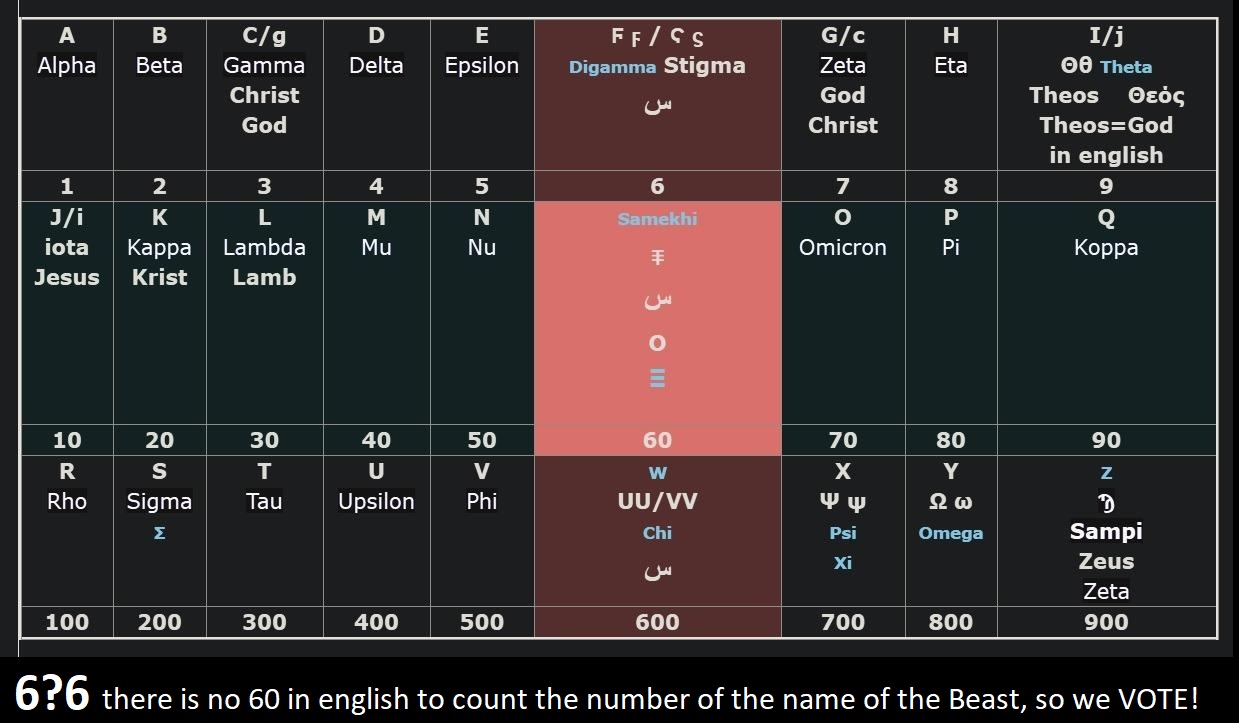
Christian how we Support the Ministry
Industrial Electronic Repair
Industrial Monitor Repair
Power Supply Repair
ebay
Manufacture's Repaired
A B C D E F G H I J K L
M N O P Q R S T U V W X Y Z
Simple Rules for this Site!
Posted by Webmaster on Saturday, August 31 2002
- Web-Ministry is intended for the Glory of God.
- Please try to be respectful of God and to be reverent toward His Word, which is the Holy Bible.
- Some may not be Christian nor agree with Christian theology in general, but please be respectful of those that do and to Christendom in general.
- People from all walks of life and backgrounds of faith are welcome here, including the backslidden and nonbelievers, as well.
- We may not all agree... but we can agree to disagree, at least.
- However, any potential disagreements still need to remain civil in nature, and should stay as such.
- Please, just debate the points of your position, if necessary, and refrain from ad hominem attacks. Slandering and name calling serve no productive purpose.
- Posting rules are based upon decent conduct and generally acceptable chat behavior and, also, on Christian beliefs and morals found in the Holy Bible.
- Please refrain from using offensive language or obscenely suggestive innuendo.
- Usernames that are not becoming of basic common decency and morality are not to be used and may possibly result in membership cancellation.
- Refusing to follow forum rules may result in membership cancellation and possibly some or all applicable posts being deleted and if necessary... entire threads.
- If you feel these things to be unacceptable, please find another forum to post on.Thank you.
- dp,webmaster,Chrysoprasus,wilshine
Jesus Christ Forums
To the Glory of Jesus Christ!
Jesus Christ Forums Software Testing
Radio for Jesus 24/7
Hosted by $SamekhiAmI

Surplus by Samekhi
OR

Cash app $SamekhiAmI
Manufacture's Repaired
A B C D E F G H I J K L
M N O P Q R S T U V W X Y Z
Web-Ministry Created this page in 0.088811 seconds